A strong core is essential for overall fitness, supporting proper posture, balance, and stability in everyday movements and exercises. Incorporating effective core exercises into your routine can improve strength, prevent injuries, and enhance athletic performance. Here are five highly effective core exercises to help you build a solid foundation of strength and stability.
1. Plank: The Ultimate Stability Builder
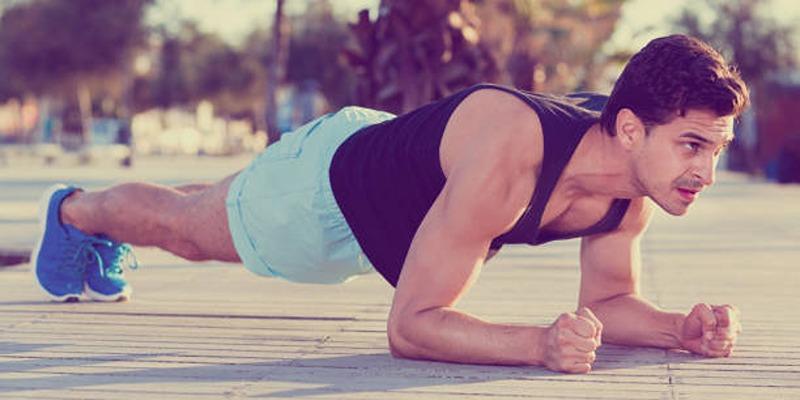
The plank is a traditional isometric hold, during which all the core muscles are engaged, almost all of them, the transverse abdominis, the obliques, and the spinal stabilizers. It helps to correct and maintain posture, balance, and general body strength without equipment.
How to Perform:
- Start with your body in forearm plank position and your elbows positioned beneath your shoulders.
- Be in a straight line with head to heels.
- Use your core, glutes, and legs to keep the form.
- Avoid putting your hips to sag or pike up.
- Keep in the position for 30 to 60 seconds.
Benefits:
- Increases deep abdominal muscles
- Increases strength and co-ordination of the muscles
- Increases back resilience
Progressions: Side planks or plank variations with leg lifts can increase the challenge as your strength improves.
2. Dead Bug: Controlled Core Activation
This exercise is excellent for developing core control and coordination. It activates the lower abdominal muscles while reinforcing proper spine alignment and reducing stress on the lower back.
How to Perform:
- Begin by lying flat on your back on a comfortable, supportive surface, such as an exercise mat. Extend your arms upward toward the ceiling so they are perpendicular to the floor, and bend your knees to form a 90-degree angle, ensuring your thighs are vertical and your shins are parallel to the ground.
- With control, slowly lower your right arm and left leg simultaneously toward the floor. Your arm should move in a straight line toward your head, while your leg extends outward and downward.
- Once your arm and leg are just above the floor, pause for a moment to ensure proper form, then return to the starting position in a controlled manner.
- Repeat the movement on the opposite side by lowering your left arm and right leg toward the floor. Continue to alternate sides with slow, deliberate movements, ensuring equal repetitions on both sides.
- Aim to perform 10-12 repetitions on each side, prioritizing proper form and core engagement throughout the exercise.
Benefits:
- Promotes spinal stability
- Improves neuromuscular coordination
- Encourages proper breathing during movement
Tips: Keep your core braced throughout and avoid letting your lower back arch off the ground.
3. Bird Dog: Strength Through Extension
The bird dog targets the entire posterior chain, including the erector spinae and glutes, while also engaging the abdominals. It’s a low-impact exercise that builds balance and core stability.
How to Perform:
- Begin on your hands and knees, ensuring your wrists are aligned directly under your shoulders and your knees are positioned beneath your hips.
- Pause briefly, ensuring your hips stay level and your core remains engaged.
- Return to the starting position, then repeat the movement on the other side.
- Complete 8 to 10 repetitions on each side.
Benefits:
- Enhances cross-body coordination
- Strengthens the lower back
- Reduces the risk of spinal strain during daily movements
Try adding light ankle or wrist weights for increased resistance.
4. Glute Bridge March: Core Meets Lower Body Strength
While primarily known for targeting the glutes, this variation adds dynamic core stability by requiring control as one leg lifts off the ground. It engages the hip stabilizers and core in unison.
How to Perform:
- Lift your hips into a bridge position.
- While holding the bridge, lift your right foot a few inches off the ground.
- Pause, then lower and repeat with the left leg.
- Perform 10 repetitions per leg.
Benefits:
- Builds core and hip strength
- Encourages pelvic alignment
- Improves lower back support
Maintain level hips throughout the movement. Do not let one side drop as you march.
5. Standing Pallof Press: Anti-Rotation Power
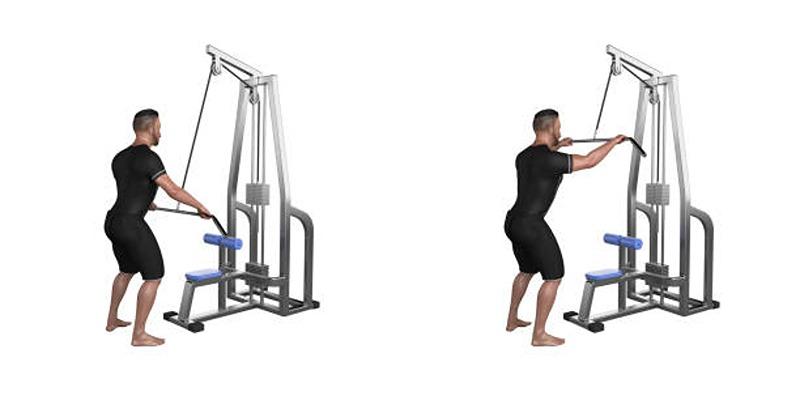
The Pallof press is a resistance-based exercise that challenges the core’s ability to resist rotation. It strengthens the deep stabilizers and enhances balance in both athletic and daily movements.
How to Perform:
- To perform this resistance band exercise effectively, begin by securely anchoring a resistance band to a fixed point at chest height.
- Stand perpendicular to the band with your feet shoulder-width apart, establishing a strong, balanced stance. Grip the band with both hands, holding it close to your chest. Engage your core to stabilize your body and minimize unnecessary movement.
- Press the band straight out in front of you, fully extending your arms while resisting the band’s pull from the side. Focus on engaging your core as you maintain stability.
- Slowly return your hands to the starting position, keeping the motion smooth and deliberate.
- This exercise is excellent for strengthening your core, improving stability, and enhancing overall body control.
Benefits:
- Enhances anti-rotational strength, improving the body's ability to resist unwanted movement and maintain stability during dynamic activities.
- Promotes better posture and alignment by strengthening core muscles and supporting proper spinal positioning.
- Optimizes shoulder and hip function, contributing to improved mobility, joint stability, and overall movement efficiency.
This move can also be performed in a half-kneeling position for added core emphasis.
Essential Tips for Mastering Core Training:
- Focus on Form: Proper technique ensures maximum benefit and reduces the risk of injury. Engage your core throughout each movement and avoid rushing.
- Frequency Over Intensity: Consistency is more effective than occasional intense sessions. Aim to train your core 3–4 times a week.
- Integrate with Full-Body Training: Don’t isolate core work. Incorporate these exercises as part of a comprehensive strength or mobility routine.
- Controlled Movements Matter: Speed often undermines form. Perform each rep slowly and to activate the right muscles.
- Breathe Properly: Avoid holding your breath. Inhale during the relaxed phase, exhale during the exertion phase. This helps keep the core braced and oxygen flowing.
Conclusion:
Core strength is essential not just for aesthetics but for overall body function, posture, and injury prevention. The five exercises outlined—plank, dead bug, bird dog, glute bridge march, and Pallof press—form a balanced routine that targets the full spectrum of core muscles. They require minimal or no equipment and can be adjusted to your fitness level. Whether you're an athlete, a desk worker, or someone aiming to move better daily, incorporating these movements into your training will yield noticeable improvements in stability, strength, and confidence in motion.